The post Blog Series: Creating a Balanced Life – #2B – Mood appeared first on Light Harmonies.
]]>
In this blog post I will continue to talk about mood and the effect it has on our ability to have a balanced life.
The information below is from a handout from the resources section of the Pain Management class I took. They are framed for and have examples for people in pain, but after each section I put in my own two cents and add a few non pain-related examples. I have decided to keep the entire section as it is, because even though I may use different words from the section headings when I work with clients, they convey the concept well.
CATASTROPHIZING: Imagining the worst possible outcome of any event. Example: “I’m probably going to have to get surgery now!” Positive Framing: “I am experiencing a flare-up, I will feel better after a day or two of rest.”1
I find that often the way we perceive things becomes the difference between seeing them as mountains or molehills. For example, those who are running the pattern of overwhelm are often unable to break down big projects into smaller sections or think that everything needs to get done today! They may think they have to do everything they can to change themselves today or do everything perfectly. Instead we need to see things from a different perspective, most often letting go of the emotions that are making situations appear to be bigger than they are. Or, in the case of overwhelm, we need to shift out of unrealistic expectations of self or others.
POLARIZED THINKING: Viewing everything as black or white, good or bad; not seeing any gray areas. Example: “If I can’t bike like I used to, I am never going to do it at all.” Positive Framing: “I’m not as good at riding my bike, but at least I can still ride.”1
I sometimes use the example of a swinging pendulum and being stuck in one extreme or another. For example, someone may have had a situation where they were hurt. So instead of opening their heart, they go to the extreme of staying away from forming meaningful relationships that require a heart connection or they stay on a surface level with others so as to not get hurt again. They don’t release the emotions causing the broken heart, and so they don’t allow themselves to live a life full of positive, uplifting relationships. Releasing the emotions and energy around the situation can allow the person to move forward and create fulfilling relationships.
FILTERING: Focusing only on the bad and ignoring the positive in situations. Example: “Why am I still in pain? Nothing good ever happens to me.” Positive Framing: “I may have never joined this wonderful book club if it weren’t for the pain.”1
The situation we are all in at this time is a perfect example of this! Instead of focusing on the things we can’t do or don’t have, we could be focusing on the things we are learning or doing because of this situation.
“SHOULD” STATEMENTS: Beating yourself up for not doing things the way you think they ought to be done. Example: “I should be able to clean the house or mow the lawn like I used to.” Positive Framing: “I don’t need to complete everything today. I will do a little each day until it is done.”1
This is such a huge one! It has a big effect on our Solar Plexus chakra, which then eventually affects the organs governed by the solar plexus, which are the biggest part of the digestive system! I like to think of them as the dreaded “coulda, shoulda, wouldas.” (That is what my intuitive cranial sacral teacher, Andrea Carver, called them.) That way of thinking gets into expectations which I could probably write a book about. This also gets into the never-ending lists of things that never seem to get done. Focus instead on seeing what you have done each day. Some days that is just getting out of bed, and others it is getting a lot accomplished. But mostly it is somewhere in between.
OVERGENERALIZING: Believing that what happens during one event will happen in all future events. Example: “I tried that breathing exercise before, and it failed. Trying again is pointless.” Positive Framing: “Maybe I missed something with the breathing exercise. I am going to try it again.”1
This is also a big one! This one falls into the category of our patterns and our past programming. So much of what we experienced as a child or were told as a child can frame how we live the rest of our lives. Beliefs such as “I am not enough” or “I am not successful” can keep a person from truly living up to their potential! T3 or Intuitive Cranial Sacral are both wonderful ways to identify and release these patterns or beliefs so new ones can be created.
BLAMING: Blaming yourself, other people, or something else for your pain. Example: “It’s all my coworker’s fault that I got hurt.” Positive Framing: “Accidents happen to everyone.”1
CONTROL FALLACIES: Believing you have no control over your own situation. Example: “If this doctor doesn’t fix my pain, there’s no hope!” Positive Framing: “I’m going to ask my doctor what I can do to reduce my pain.”1
Blaming and Control Fallacies fall under the category of giving away our control, or giving away the responsibility we have of owning our own choices. Things happen and sometimes people are not nice to us or do horrible things, but it is how we react to these situations that creates our mental attitude for that particular moment and in the future. We always have a choice of how we will handle a situation.
MIND READING: You make assumptions about what other people are thinking about. Example: “The way she looks away when she speaks to me . . . she doesn’t care.” Positive Framing: “She looks distracted. I am sure she has a lot going on in her life.”1
We have no control over what anyone thinks or doesn’t think about us. That is just a fact! We can be perfect and someone will not like it. It is really none of our business and leads to judging. We haven’t been in their shoes or had their experiences, so we have no right to judge. Again, it goes back to choice and whether I choose to react or to respond and being compassionate and giving others the benefit of the doubt.
In the resource above, they use the word “reframing” or “positive framing.” This is basically changing the negative thoughts to positive ones. Below are a few tools you could use to do this:
One is called the “notebook method,” and it was taught to me by my Intuitive Cranial Sacral teacher as well. To use this method, you need two notebooks: a black one and a white one. When you have a negative thought, you write it down in the black notebook with the intention that you are letting it go as you write it. Then you write two positive reframes in the white notebook. This brings the new positive thoughts into the forefront of your mind and changes your thoughts to positive ones.
The next tool I learned from a book written by Christiane Northrup. When you have a negative thought about yourself or something you have done, you then reframe it into a positive thought like they have done in the examples above or put the thought into a new light and say, “What a great job I just did of spilling that milk! I got it all over the floor and everything!” The important thing is to be aware. Northrup says, “Whenever you catch yourself doing something right, pat yourself on the back: ‘Today I spent 15 minutes meditating. I love that I took the time to do this for myself.’”2 The important thing is to be aware and STOP when the negative thought comes in and change it!
The most important thing to remember is that none of us are perfect and that we are going to have negative thoughts. But when we are aware of them, we can use the tools above to change them and can choose differently the next time! The more you make different choices, the faster new neuropathways are formed and positive thoughts or choices become the automatic response.
At all times of our lives, especially right now, finding balance is so important! The more we can stay positive and have gratitude, the more we have the desire to do the things that keep us balanced. Our mental-emotional state is also a huge factor to our immune system health!
- https://www.oregon.gov/oha/HPA/dsi-pmc/PCT/Mood_Mindset_FINAL_.pdf
- Christiane Northrup, M.D., Dodging Energy Vampires: An Empath’s Guide to Evading Relationships That Drain You and Restoring Your Health and Power (Hay House, 2018), 108.
The post Blog Series: Creating a Balanced Life – #2B – Mood appeared first on Light Harmonies.
]]>The post Blog Series: Creating a Balanced Life – #2A – Mood appeared first on Light Harmonies.
]]>
This second installment of my blog series on Creating a Balanced Life is coming at an interesting time. With all the closures and changes that have come with the COVID-19, many people are in a state of shock and fear and with that comes a lot of anxiety and panic. Store shelves are showing signs of that panic. In this blog I wanted to address mood. In the Merriam-Webster Dictionary, mood is defined as “a conscious state of mind or predominant emotion or a prevailing attitude or disposition. A receptive state of mind predisposing to action.”1 Do our emotions really have that much power? Yes, they do. However, we do have a choice of whether to act on the emotions or not and for that matter what emotions you choose to continue to feel.
Mood comes from our thoughts. We have a thought, and most often an emotion comes along with that thought based on current situation and our past conditioning. We then either have more thoughts and thus feel more emotions or we act. These can result in positive or negative consequences. Negative thoughts and emotions may result in angry words or thoughts that lead to bitterness or resentment, hopelessness, or poor choices. Positive thoughts and emotions create feelings of calm, peace, contentment and love. These choices often cause people to act out in loving and uplifting ways. In the resources provided by the Pain Management class I took it says, “Positive thinking can help reduce negative feelings, pain, stress, and increase your motivation to make healthy choices.”2 And I will add the fact that positive thinking leads us to think beyond ourselves.
The resource materials suggest 5 ways you can increase positive thoughts and feelings. These 5 things are:
- Learn to reflect on and reframe negative thoughts.
- Participate in activities that you are passionate about.
- Spend more time with friends and family, or find new social groups.
- Learn about relaxation techniques like meditation and mindfulness.
- Ask for a referral to Cognitive Behavioral Therapy3 (or have a session with me)
I believe that being positive is a choice. Often we allow negative thoughts and emotions to give us an excuse to be negative and justify our actions because of a situation that made us angry or so-and-so said this to me and ruined my day. We choose whether to react or respond to situations. When we are in a reactionary cycle it may be difficult to change, but it can be done! The most important things are to start to become aware of your thoughts and actions and to decide to do something differently when the same situations happen over and over.
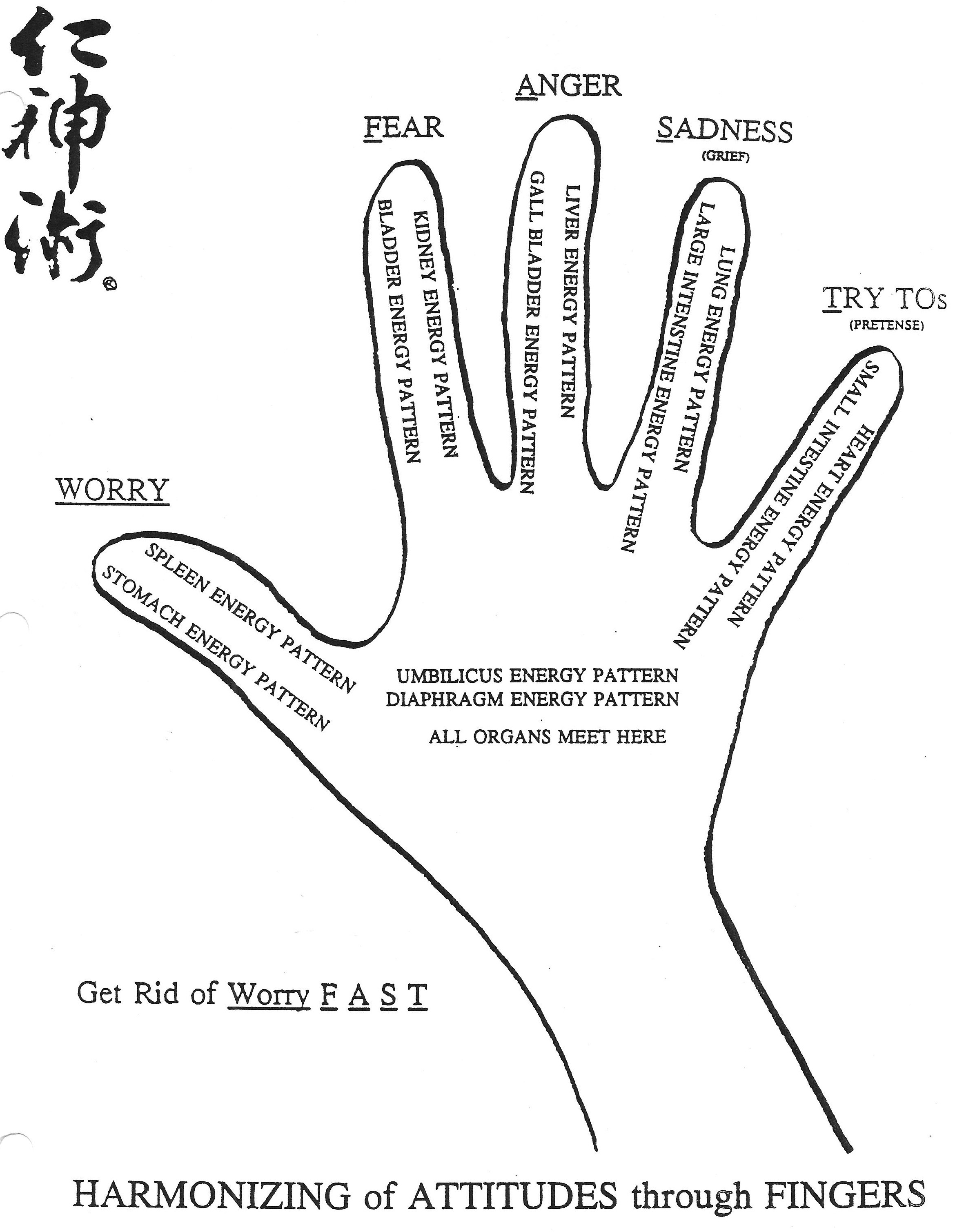
In Jin Shin Jyutsu, it teaches how we become stuck in what they call “attitudes.” The attitudes are worry, fear, anger, sadness/grief, and try to or pretense. If we choose to feel the same emotions over and over and over, we get stuck in one or more of these attitudes and it becomes an automatic response to any negative situation. We can choose to get out of that attitude by becoming aware that it is happening and choose to react differently the next time. Releasing the emotions you are feeling in the moment or releasing beliefs that keep you going back to those same patterns are important as well. These decisions help us to get into choice: a place where we don’t automatically react, but have a moment to choose differently.
I have more to say on this subject so I will continue on the next blog. This blog will be 2A and I will do a 2B.
1https://www.merriam-webster.com/dictionary/mood
2https://www.oregon.gov/oha/HPA/dsi-pmc/PCT/Mood_Mindset_FINAL_.pdf, page 2
3https://www.oregon.gov/oha/HPA/dsi-pmc/PCT/Mood_Mindset_FINAL_.pdf, page 1
The post Blog Series: Creating a Balanced Life – #2A – Mood appeared first on Light Harmonies.
]]>The post Blog Series: Creating a Balanced Life – #1 – Sleep appeared first on Light Harmonies.
]]>
After a very busy last 5 months I am finally sitting down to write another blog.
In order to relicense in the state of Oregon I had to take a one hour Pain Management class. To my surprise it was very insightful. The course goes over 5 of what they call “key domains of active engagement”. In the days since I took the course I have been thinking about how at least four of the five keys are things that we should all be doing. These four include sleep, mood, activity and nutrition. I would like to go over these 4 areas and add my two cents as well. However as I started into writing this there was more information than anyone would want to read in one blog so I have decided to break it up over a series of 4 or 5 blogs. So for this blog I will focus on sleep.
It is well documented that getting 8 hours of sleep a night is helpful to reduce stress, and allow our bodies time to heal since that is when our bodies heal. “Getting restful sleep can make you feel energized, more active, more social, and reduce your cravings for unhealthy foods.”1. It also helps to promote a more positive outlook on life and a desire to change and do better.
Dr. Christiane Northrup said the following, “When we don’t get sufficient sleep, we not only become tired and irritable, but we are more accident-prone and exhibit decreased concentration, efficiency, and work motivation. Inadequate sleep can cause errors in judgment. Plus, lack of sleep causes stress hormones to rise, which over time can disrupt hormonal balance and depress the immune system. Too little sleep over time can put you at greater risk for obesity, heart disease, and diabetes.
Sleep is also critical for consolidation of learning and memory, and it serves as a way to help us sort out in our minds and bodies the things we have learned and experienced during the day. In fact, studies have linked a nightly battle with insomnia to memory loss, dementia, and even Alzheimer’s, not to mention other brain disorders, including Parkinson’s.”2
The following is from a handout from the pain management class site. I have put in my input in parenthesis.
HABITS
Create a nighttime routine – Routines should start 30-60 minutes before your bedtime. Examples include taking a warm shower, meditating (My two cents – only if you are doing a night-time meditation created to help you sleep. Meditation is usually very restorative and that is not what you want before you go to sleep.), reading (Something uplifting since what you do before bed can show up in your dreams.), and stretching.
Stick to a schedule – Go to sleep and wake up at the same time every day.
Skip naps if possible – Naps can interfere with your sleep at night. If you need to nap, limit it to 30 minutes a day.
Do something physical – Strive to be physically active for at least 10-20 minutes each day, but limit heavy physical activity in the 3 hours before bedtime.
Limit caffeine, nicotine, and alcohol – These can affect how deep you sleep, so if you want to consume them, do so earlier than 6 hours before bedtime.
Cut back on rich, fried, spicy, or citrusy foods – They can upset your stomach and make sleep difficult. Avoid them in the 4 hours before bedtime.
ENVIRONMENT
Turn off bright lights – Dim lights before bedtime and turn lights off completely during sleep.
Shut off electronics and television screens – Electronics and television screens can throw off your sleep cycle. Turn them off 30-60 minutes before bedtime.
Keep your room cool – The best temperature for sleep is between 60-67 degrees.
Reduce noise – Random noises can wake you up during the night, but white noise—like a fan— can help block out unwanted noises.
Get comfortable – Firm foam body pillows can be used to support your back, hips, and knees.
STRESS
Reduce stress – Spending time with family and friends and doing things you enjoy in the evenings can put you in a relaxed mood.
Try not to watch the clock – Turn your alarm clock away from the bed or use the alarm on your phone instead. Make sure the screen of the phone isn’t on all night.
Avoid watching news and social media – They may stress you or overexcite you and make falling asleep difficult. Avoid them in the hour before bedtime.
Deal with racing thoughts – Get your mind off your racing thoughts by getting out of bed and doing a relaxing and distracting activity in a quiet and softly-lit room until you are sleepy.
The following are suggestions for a good night’s sleep from Christiane Northrup. Many are the same but she uses different language so I thought I would add them all.
Avoid alcohol. – While you may fall asleep quickly after drinking, alcohol can interrupt your circadian rhythm. Another reason you don’t sleep well when you drink alcohol is because alcohol blocks REM sleep, the most restorative type of sleep, so you wake up feeling groggy. Finally, alcohol reduces anti-diuretic hormone (ADH) so you may have to get up to urinate during the night.
Limit caffeine. – Women metabolize caffeine much more slowly than men. Even one cup of coffee in the morning can affect your sleep quality later if you are sensitive.
Get regular exercise. – Regular exercise can improve the quality and quantity of sleep. Being physically active can make you feel more tired at bedtime. In addition, exercise can reduce stress levels, making it easier to fall and stay asleep. Mind-body exercises such as gentle yoga can help quiet the parasympathetic nervous system, which can help you relax before bed. Just don’t exercise vigorously within three to six hours of bedtime.
Get a good quality mattress. – Be sure your mattress supports you and does not cause any stress on your joints. A good mattress is worth the investment—you spend a third of your life asleep!
Sleep in a dark room. – Excess light in your bedroom – such as the artificial light emitted from streetlights, televisions, or smartphones and other devices – can disrupt your circadian rhythm by suppressing the production of melatonin.
Follow a low-glycemic diet. – High blood sugar and insulin are often associated with poor sleep because they are associated with high cortisol levels at night. When cortisol is high at night, your rapid eye movement (REM) sleep is disrupted. This can leave you feeling unrefreshed, no matter how many hours of sleep you get.
Don’t eat before bed. – There are a number of reasons why eating a large meal before bed isn’t the best idea, including the possibility of weight gain if you do this regularly. In addition, your body digests food better when you are upright. So, lying down to sleep after a heavy meal may cause you to experience heartburn or acid reflux. Since it takes about 3 hours for your stomach to empty after a meal, a good rule of thumb is to stop eating at least 3 hours before bed. However, a light snack (one high in protein and low in refined carbohydrates) is okay and may even help some people sleep better.
Stop Drinking Water. – While you want to be optimally hydrated at all times, drinking a lot of water before bed may cause you to wake up in the middle of the night to go to the bathroom, which causes a big disruption to your sleep cycles. Try to drink (and eat) more water during the day and less late at night. If you do need some water, take small sips rather than big gulps.
Tidy Up. – I’m not suggesting that you clean your entire house top to bottom. But, straightening up, washing the dinner dishes, preparing your kitchen for your morning routine, or putting away your clothes can be great ways to bring your attention to the moment. Plus, having a tidy house can reduce cortisol levels, helping you to feel more relaxed.
Make a to-do list. – If you tend to worry about things you need to do tomorrow while lying in bed, it helps to write them down before going to sleep. You may also want to leave a pen and a piece of paper next to your bed so if you wake up and think of something you forgot, you can jot it down. (You can also write down your dreams.)
Stay calm. – Don’t watch the news (or disturbing movies) before bed—it activates the sympathetic nervous system. For the same reason, try not to have emotionally distressing conversations near bedtime, and try not to stew over things. (If you find you are turning things over and over in your mind, get out of bed and do something else relaxing, such as taking a bath or reading a good book for a while).
Wind down: – Establishing a ritual that helps you wind down before bed can help to signal your mind and body that it’s time for sleep. Change into your PJs and get completely ready for bed at least half an hour before you climb between the sheets.
Shut off all electronics. – The blue light that comes off screens mimics the light of full daylight, which can affect melatonin production and disrupt your sleep patterns. Plus, checking email and social media before bed can cause overthinking and increase stress and worry when you are trying to go to sleep.
Practice mindfulness. – Mindfulness helps to decrease stress levels and increase relaxation, which can help you fall asleep faster and stay asleep. You can practice mindfulness by sitting quietly, stretching, or gently practicing yoga, or reciting affirmations before bed.
1 https://www.oregon.gov/oha/HPA/dsi-pmc/PCT/Sleep_FINAL_.pdf
The post Blog Series: Creating a Balanced Life – #1 – Sleep appeared first on Light Harmonies.
]]>The post Holding Onto the Past Limits Our Future appeared first on Light Harmonies.
]]>
A few weeks ago I received an email from a company that publishes self-help type books called, Walk the Talk. A quote from the book they were selling caught my attention because it is something I see all the time. So I chose to write about it today. The quote is:
“Without realizing it, we often carry something around with us everywhere we go. We bring it out in our conversations and it shows up in our attitudes. It never really existed, yet its power lives among us and keeps us from moving forward. What is it?
It’s the past.
This comfortable past is often our “best friend.” It’s who, and what, we know best. It’s like a worn-out, easy chair or an old pair of shoes that fits us and feels just right. AND it can be the main thing that often keeps us from our desired future.
So, ask yourself this question- What are you holding onto from your past? And how might that be limiting your future?”
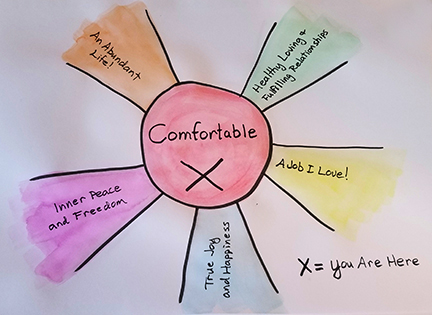
The thought of what things from our past are limiting our future is what I wanted to write about today. Often we hold onto the patterns and beliefs that are “comfortable” not realizing how much they are limiting us from creating something different, being something different, or doing something different.
We often think it is easier to stay in the old patterns and beliefs even though they are no longer serving us and oft times making our lives miserable, all because we fear the uncomfortable that accompanies change.
We wish we could jump over the change part and get to the new comfortable. Sometimes we are brave enough to venture into the uncomfortable to get to the next new comfortable; however, we end up, in yet a different rut. What I have come to realize lately through my own experiences is that the only place that allows for constant growth and being open to new possibilities is getting comfortable with the uncomfortable. Life is about change. Stepping into the unknown is the journey to true freedom! Letting go of the old limitations makes it possible to take that step each day. What are you ready to let go of in order to create a different future?
Are you ready? Go to the “Contact Me” page and contact me to schedule a session to start creating a new life today!
The post Holding Onto the Past Limits Our Future appeared first on Light Harmonies.
]]>The post Meditation Thoughts appeared first on Light Harmonies.
]]>
It is the last day of the month and I realized I haven’t written my blog for the month. I have been pondering on what to write about this month. And as I write this I am still not certain.
At the first of the month I taught my first meditation class. Since that night I have been thinking about how much meditation has helped me over the years. My morning meditation is something I do religiously but for the last 8 months since I went to a meditation retreat my goal has been to get in the habit of meditating in the afternoon or evening as well. I wish I could say I have done it every day, but I have not. My afternoon schedules varies so it is tricky to set a specific time. However; since I taught the Introduction to Meditation class I have been pondering on how much I have benefited on the days I have meditated. I realized that even when I only meditated for 2 minutes I received benefits. As I have seen those benefits in my daily life it has given me more of a desire to make it a priority! We recently purchased a porch swing and that has become my favorite evening meditation spot. Sitting in the late afternoon sun, allowing the breeze to slightly swing me as I hear the birds in the background and smell the sweet smells of early summer. It is like a little slice of heaven! Other days it is in my work room after a day of clients sitting in my chair and soaking in all of the good energy of the work that has been done that day. One day it was in my car before I went in the house after being out for the afternoon. I am opening myself up to other options so that I will make that time a priority.
What I have noticed is that my evenings go better. I am refreshed, as though I have just taken a long nap and have a second wind for the end of my day. My mind is clear and I am able to be present for time with my family or other events of the evening. I am calm and able to make decisions easily because I am connected with my higher self. And the biggest thing I have noticed is that I fall asleep quicker and sleep soundly through the night.
The other day I was running out of time to meditate and then I remembered how it helps me sleep and I stopped what I was doing and went out on the porch swing and spent 5 minutes getting present. It was wonderful and I was so grateful for the minutes of quiet since I had spent 2 hours in traffic earlier that day. I was able to calm down and it gave me energy to make dinner and enjoy my evening.
I am so grateful for this wonderful tool that has blessed my life so immensely and has made such a difference!
If you haven’t given meditation a try, I would encourage you to do so. If you are doing it once a day, work on adding in that second time. I would love to hear about your experiences and how meditation is benefiting your life. Just comment on this post.
The post Meditation Thoughts appeared first on Light Harmonies.
]]>The post Introduction to Meditation Class appeared first on Light Harmonies.
]]>There has been a lot of hype about meditation lately. There is a reason for that. It is a wonderful way to find stillness in this crazy world! If you have wondered what meditation really is and how it can benefit your life, this class will answer those questions and more. We will talk about different types of meditation and the benefits of meditation. We will also try a few different ways to meditate and help you set up your own meditation practice.
For more information on the class click on the link below for the flyer.
Intro. to Meditation class flyer
Click on the link below for the registration form to confirm your spot! There are only 20 spots and there is a price break for early registration so register now!
Intro. to Meditation class registration form
Looking forward to seeing you there!
I am working on having it filmed. I will keep you updated. Let me know if you are interested in a video.
The post Introduction to Meditation Class appeared first on Light Harmonies.
]]>The post Awareness appeared first on Light Harmonies.
]]>
I mentioned in my last blog that it is important to be aware of our emotional state. For March’s blog I thought I would expound on that.
Most people are very unaware of their emotional state and just go through life day by day, until sometimes something significant happens in their life that assists them in becoming aware that they have been unaware. This awareness can lead to becoming more aware more often.
What do I mean by awareness? The Merriam-Webster Dictionary app defines it this way, “feeling, experiencing, or noticing something.” In the synonym definitions it says: “aware, cognizant, conscious, sensible, alive, awake means having knowledge of something. Being aware implies vigilance in observing or alertness in drawing inferences from what one experiences. Conscious implies that one is focusing one’s attention on something. Sensible implies direct or intuitive, perceiving especially of intangibles or of emotional states or qualities.”
Being aware of your emotional state is tuning into how you are feeling. Here is an example. You are driving home and someone cuts you off in traffic. You get upset. As you arrive home you have forgotten about the incident but are now a little on edge. You come home to a mess or someone in your family says something that normally wouldn’t bother you and you start to feel angry. You turn on the tv to relax but feel annoyed. The next day you wake up feeling overwhelmed about the day’s activities. As you go to work you find out someone didn’t do what you asked them to that sheds a bad light on you and your boss gets angry at you………. From this example of things that happen all the time you can see if you are not aware of your emotional state, and do something to change it you can spiral into patterns of behaviors that can keep you in a state of negativity for days, months or even years, leading to much heavier emotions and emotional patterns or attitudes that continue to run throughout your life.
When you are aware of and are assessing where you are emotionally from day to day it is easier to see patterns of behavior in your life and as I said before in my last blog, releasing these emotions quickly helps you to move in a more positive direction and changing old patterns is possible.
The post Awareness appeared first on Light Harmonies.
]]>The post What is your current emotional state? appeared first on Light Harmonies.
]]>
My February blog is late but it is here! I have been busy creating a new logo and of course seeing clients like you.
My last blog talked about thoughts and perceptions and emotions. I wanted to follow up and write more specifically about emotions. Most often emotions follow thoughts or thoughts are followed by emotions; either are followed by actions. Our dominating emotions become our dominating attitudes. These attitudes dominate every aspect of our life in some way or another. In Jin Shin Jyutsu there are 5 main attitudes; worry, fear, anger, grief and try to (or pretense). When we get stuck in one of these attitudes our first response to the situation is the one you are most stuck in. Do you worry about everything or get angry over the smallest things or does fear keep you from trying something new? If so, you are stuck in an attitude. You may already know which one you go to. How is that affecting your life? Your relationships? The things you hold dear?
So, you can see how important it is to stay on top of our emotional state. Where are you now? Don’t get me wrong, it is important to feel emotions, that is one of the things we are here to learn, but we weren’t meant to get stuck in the negative ones.
As I have become more aware of these things in my own life I know what my weaknesses are and the patterns I am working on overcoming. I know what triggers me and if I am not staying on top of my emotions I can quickly start to move back into old patterns. When I am not paying attention, I can easily find myself in an emotional state I did not desire and have to back track to figure out where I got off. When I am aware as soon as I realize I have been triggered I use several tools to let go of my negative emotions, or beliefs and get back into a more positive place. Sometimes it is EFT or Emotion Code or a tapping technique I learned in Intuitive Cranial Sacral. It only takes a few minutes if I catch it right away or a little longer if it has been awhile. Awareness is the key.
There are times when a situation has triggered something deeper inside of me and the simple tools aren’t enough. That is when I know I need help to see things from a different perspective and it is time to make an appointment for a session with someone I work with.
During the sessions I facilitate, I often teach these tools and ways to get out of the attitudes we get stuck in. I also will be offering classes teaching these techniques during this year. I look forward to teaching you!
The post What is your current emotional state? appeared first on Light Harmonies.
]]>The post New Logo! appeared first on Light Harmonies.
]]>
I have been working on a new look for Light Harmonies recently. I have shifted and changed and felt it was time for my branding to reflect how I feel inside! I am free and soaring! What I envisioned in my mind was an eagle soaring free in the sky, so that is my new logo. The colors show open and flowing chakras and the air is my Savior carrying me. When I saw the image I remembered the Bette Midler song, “You are the wind beneath my wings.” (https://youtu.be/0iAzMRKFX3c link to the song) It will take time for me change everything over to the new look especially my website but the information here hasn’t changed. However, changes and more information on this page are in the works so keep returning throughout the year. I also have a meditation class in the works. Sometime in the next month or two. I will be announcing information soon. Thank you for believing in me.
The post New Logo! appeared first on Light Harmonies.
]]>The post Thoughts, Perceptions and Emotions appeared first on Light Harmonies.
]]>
I made a goal to write a blog at least monthly this year so here is January’s (although it is February when I am getting it posted. Over the past several weeks I have been thinking about thoughts, perceptions, and emotions.
We are usually unaware of all the thoughts that run through our minds throughout the day. Our thoughts wander here and there or for some dart here and there, but do we realize our thoughts eventually become our actions. The more we think the same thoughts over and over the more conscious they become and the more likely we are to act on them, sometimes without meaning to. Thoughts can keep us stuck in old patterns or bring us to change. It depends on how conscious we are of what we are choosing to think about. Are we allowing ourselves to dwell on negative or positive thoughts? Are we rehashing old mistakes, thinking about a conversation that didn’t go so well, or allowing negative self-talk to rule our mind? Or are we thinking about how grateful we are for the good things in our life, recognizing the good we have done that day, or being hopeful for the future? We get to choose each moment whether we are allowing positive or negative thoughts on the stage of our mind.
Perception is how we see life, or the lens we see through. In essence, how we see ourselves, others and situations. It is shaped by our emotions and past experiences. Our limited perceptions keep us in boxes of what we perceive as right or wrong. This causes us to come to quick judgements, closes us off from different ways of looking at things, or prevents us from seeing another’s perspective. These perceptions cause bias’s that keep us stuck in old behaviors and patterns that limit us from seeing new opportunities.
Emotions put energy behind the thoughts and often compel us to action. Emotions can be either positive or negative. Do I allow my negative thoughts and the accompanying anger to cause me to yell at someone, or do I take a few moments and take some deep breaths and diffuse the emotion and be open to seeing things from a different perspective? When we are aware of our thoughts and make conscious choices of how we feel, we can change our life. Staying on top of which emotions we are feeding is key! Awareness is essential! More on staying on top of our emotions in my next blog.
So some food for thought…what are you choosing to think and feel and see?
The post Thoughts, Perceptions and Emotions appeared first on Light Harmonies.
]]>